

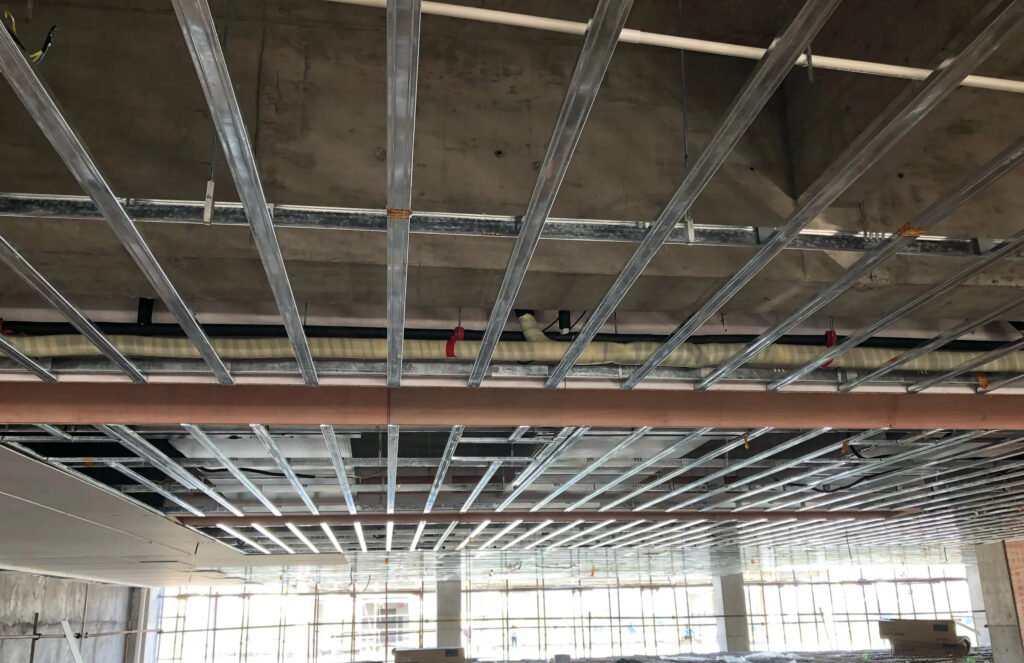
Steel profiles, valued for their excellent quality, lightweight nature, and engineering applications, are gaining traction globally, particularly in China, where they are essential building components. The global economic downturn has increased foreign demand for options such as steel profiles, making them favorable choices.
China dominates the steel profile industry, commanding a major share of the international market. Its contribution to global output and exports exceeded half, indicating an upward trend.
With exceptional quality and cost-effectiveness, China’s steel profile products thrive thanks to superior manufacturing technology and efficient production management. Innovation is a priority, with new products added regularly to meet changing market demands.
Faced with international competition, Chinese steel profile companies are expanding abroad, increasing brand recognition through international exhibitions and effective customer engagement. Government support and improved IP protection have further accelerated their international expansion.
Looking ahead, China’s economic ascendancy and enterprise innovation promise to strengthen its global steel profile market position. Collaboration with renowned entities will enhance their competitiveness and international influence.
The quality of the steel profile depends on top-tier strips, prioritizing toughness and durability abroad. Factors such as the condition of the forming machine and the thickness of the raw strip are strictly scrutinized. Differences in profile side galvanization affect the final quality. Combining the QC profile with diligent manufacturer management optimizes foreign market requirements.
First, understand the raw materials of the steel profile. Premium profiles use cold-rolled galvanized steel for superior strength, while substandard profiles may use plain steel. When shopping, ask for strip thickness, strength, hardness, and corrosion resistance indicators to select the best products.
Secondly, focus on the aesthetics of the steel profile. A premium profile boasts a sleek surface, a uniform galvanized layer, and no discernible color variations, scratches, or flaws. Profile thickness and dimensions should comply with industry standards. Being too thin or too thick can affect performance.
Finally, consider reviewing the test report before purchasing steel profiles. This verifies product quality and performance alignment with standards, boosting construction safety and reliability.
In essence, when buying a steel profile, prioritize quality, appearance, thickness, size, etc. Verify the certificate or test report for quality assurance.
China adheres to global light steel profile production standards.
First, in the procurement of materials, some Chinese companies bypass international checks for inferior materials or skip tests.
Second, in terms of production methods and innovation, China lags. Global counterparts optimize with automated lines, while some Chinese methods rely on manual labor, reducing efficiency.
Third, China meets international safety and quality standards for light steel profiles. Mandates for sturdier, longer-lasting, and eco-friendly products are observed, but some Chinese companies may overlook these factors, risking product quality and safety.
Finally, China is strengthening its branding and marketing. International brands command market credibility, while Chinese brands have less visibility and influence. Some Chinese companies lack thorough planning and effective marketing strategies, contributing to reduced market presence and competition.
Closing the gap requires Chinese companies to focus on procurement, process enhancement, technology R&D, quality control, branding, and marketing.
Collaboration with global players is vital to strengthening the competitiveness of the light steel profile industry.
The rapid expansion of China’s light steel profile market can reach saturation; expanding abroad would advance building materials technology and stimulate growth, yielding global advantages.
International markets have strict standards for light steel profiles, requiring priority to be given to quality grading. Optimal quality products could help the domestic light steel profile rise globally.
Framing policies to foster technological progress in the light steel profile sector can drive innovation. Correlating research and talent acquisition powers the industry’s technological prowess. Improving customer service to meet diverse needs bolsters industry competitiveness. In addition, international cooperation and exchange will help integrate advanced foreign technology and norms into China’s steel industry.
On the market front, energy-efficient products are favored due to rising energy concerns and environmental awareness. International players must develop green, energy-efficient products to meet market demand. As construction progresses, the quality and performance of light steel profiles take precedence. Continuous innovation and product development are therefore crucial to maintaining market competitiveness.
Moreover, in the global light steel profile market, cross-border e-commerce and online sales are gaining traction. Global product access requires companies to adopt this new sales model, leveraging e-commerce and social media for global promotion and brand recognition.